


Tech designer
System designer
Narrative designer
IN CHARGE OF:
Designing and implementing the catlike vault system
Designing and implementing the 3Cs
Designing and implementing the AI decision trees
Creating a post-apocalyptic world based on a pre-existing IP
Creating character sheets for all characters

Roko
Action-Adventure / Unreal / 3 weeks
A mix between TUNIC's top-down world and Stray's aesthetic.



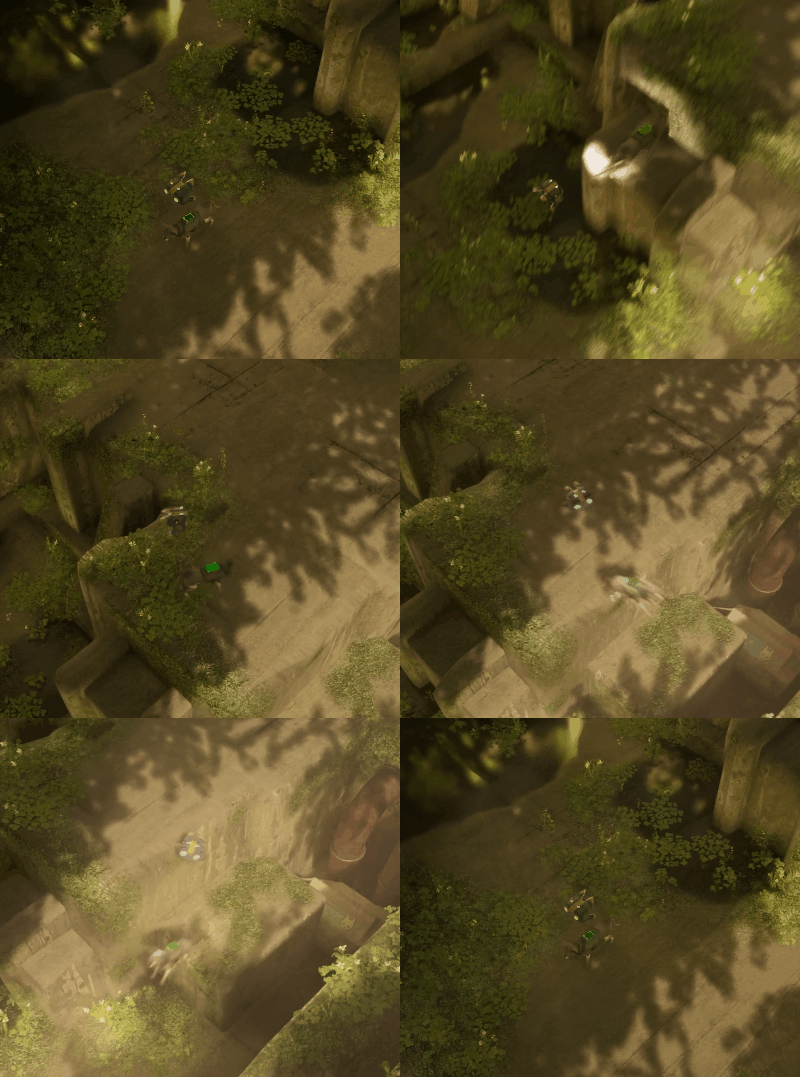
Our cat protagonist hopping from one ledge to the next.
AI decision trees
As real-time combat was going to be a big part of our game, much like TUNIC, we needed to understand how AI worked, what variables were necessary for them to function, and how to correctly implement them.
I chose to use Unreal's StateTree plugin to help myself visualize and properly organize the different AI states that I had designed prior to implementation along with our system designer. We were able to quickly piece together simple AIs that allowed multiple behaviors from just a few variables, making enemies reactive and easy to implement and iterate.

The CombatManager takes into account who has the highest priority.
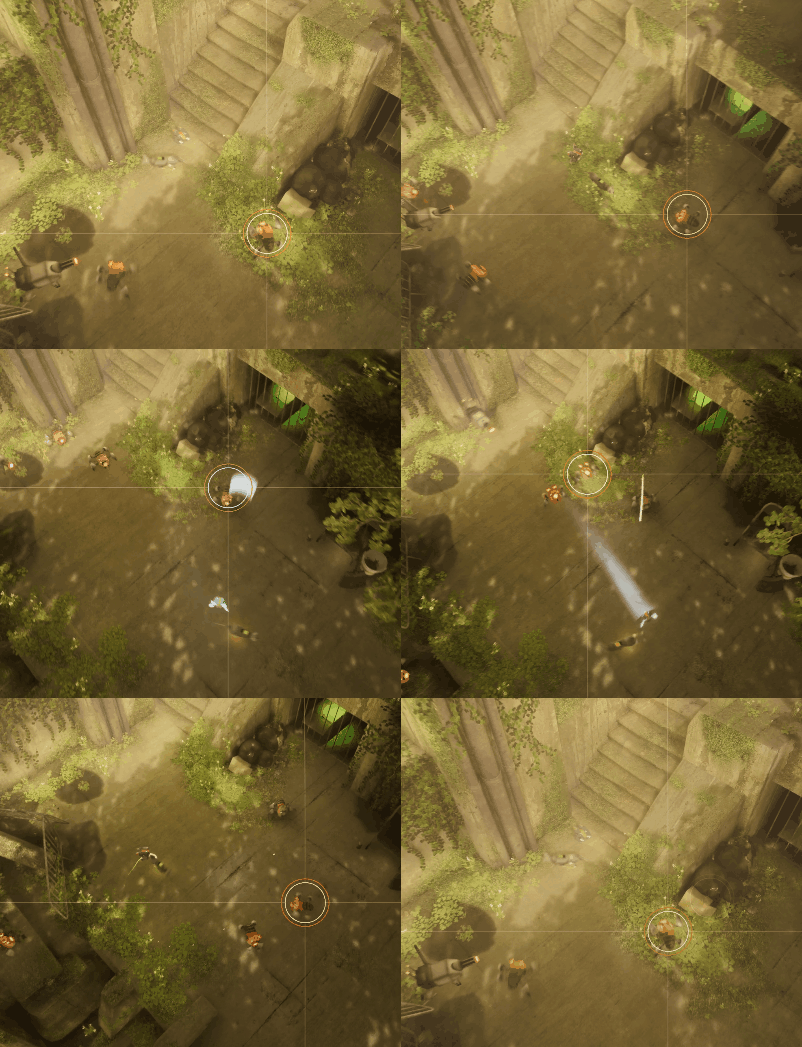
The robots do not attack all at once - they wait for an opportune moment.
Catlike vault system
The main issue we first struggled with during production was the design of a system that mimicked Stray's vault system, while keeping in mind the constraints of TUNIC's top-down camera angle.
Whilst designing this system, I wanted movement to feel fluid, precise and catlike. Allowing the player to control the jump from one point to another would cause issues due to the camera angle, and would go against the feeling of being an agile cat darting here and there if the player's motor skills were subpar.
We focused on a system that not only allowed precision in movement but also an ease of use by both our level designers and players, wherein by placing invisible collision boxes that specifically interacted with this system, we could determine the character's landing point, and with just the press of a button allow the player to scamper to and fro to their heart's content without ever failing a jump, much like in Stray.
Thanks to this, were were able to design levels with a lot of verticality compared to TUNIC, allowing more freedom in how our level designers created levels and granted a feeling of vastness that strived to imitate Stray's scope.
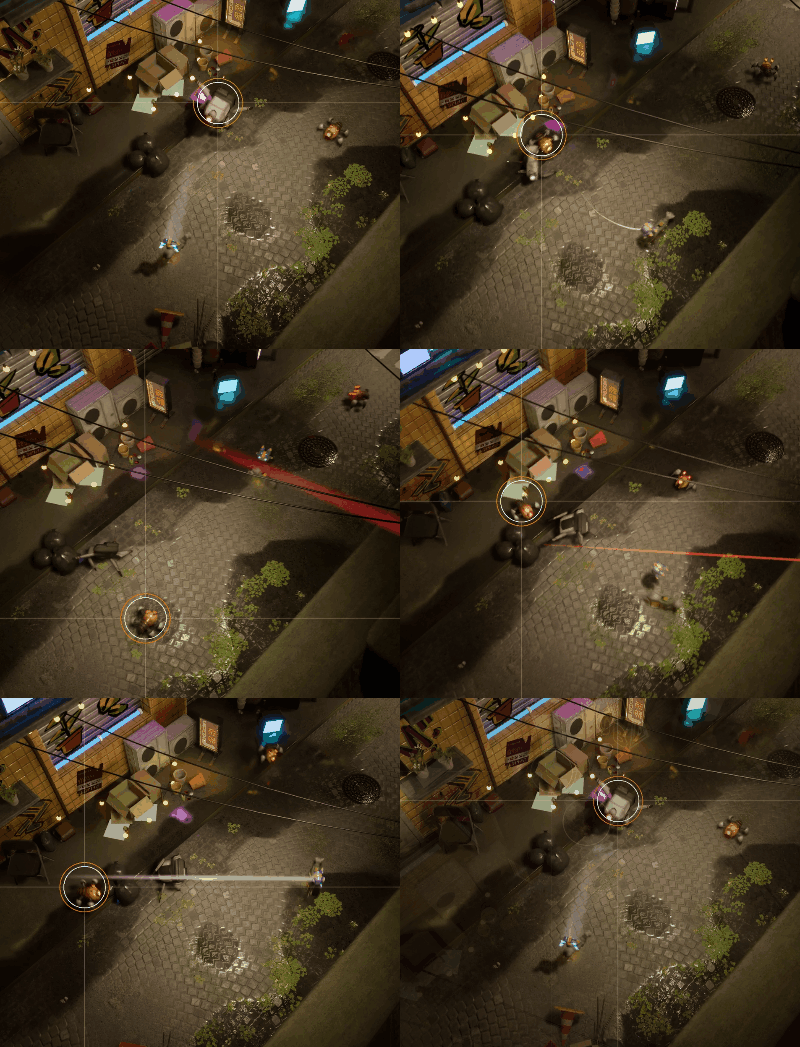
Enemies strafe, retreat and approach all according to their AI.

The StateTree plugin helped us iterate swiftly and in an organised manner.
AI combat system
We wanted the combat with AI to feel fair, and despite having numerous enemies around us at multiple times in the game, we didn't want them to easily overwhelm the player by all attacking at once.
I implemented a system that took into account all active enemies in the level, and would give orders to attack individually based on a timer. The manager would be able to give up to a certain number of orders, and would have to wait for the end of the enemy's attack to be able to give out more.
This way, enemies took their time surrounding the player, strafing, retreating, and attack orders were given randomly among those who were in a more favorable position to attack, making combat dynamic but not overwhelming despite large numbers of enemies.
Meet the team
2D artist
3D Character artist, Composer
Tech artist, Environment artist
Environment artist, Prop artist
3D Character artist
Level designer, UI designer
System designer
Production manager
Level designer